
Language and translation
The question is no longer ‘can the machine speak Welsh?’ but ‘what kind of Welsh?’
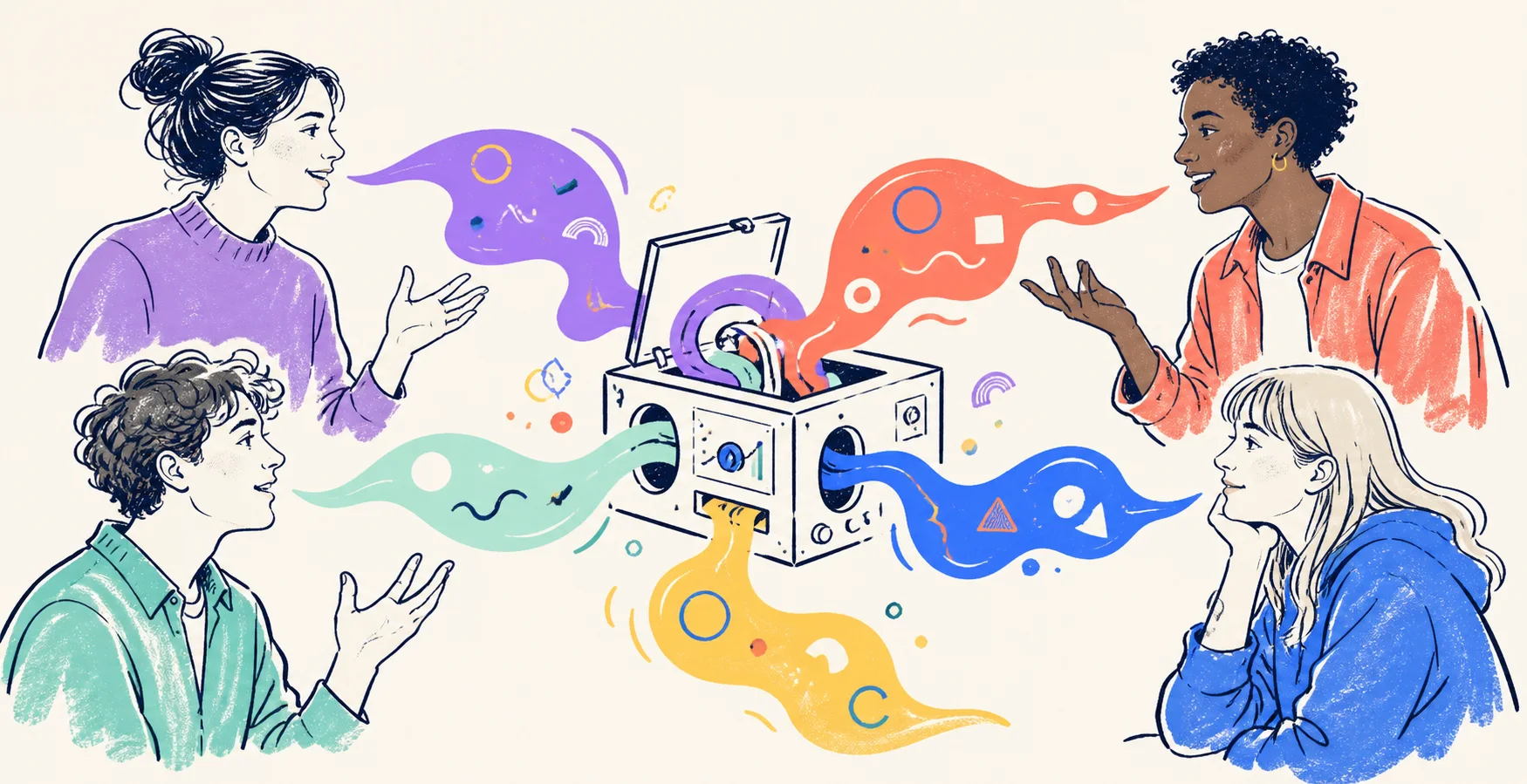
Almost every large language model can now generate Welsh text. But, as the Coleg Cymraeg Cenedlaethol report showed in June 2026, the result often sounds translated rather than like natural Welsh. The language may appear grammatically acceptable at first glance, but English syntax is evident in phrases such as ‘Lleihad yn ganrannol o siaradwyr’ and ‘gwneud mynydd allan o molehill’, in unnecessary emphasis, and in borrowings where a Welsh word already exists.
That is why language quality needs to be considered separately from general ability. A model may score highly on comprehension tests while still missing what makes a language live: idiom, tone and natural rhythm. In this section, we track the research and tools, and share practical ways to get better Welsh from the models available today.
The Coleg Cymraeg report
A full analysis of the UWTSD and Coleg Cymraeg Cenedlaethol study — the most detailed examination yet of the Welsh produced by ChatGPT, Copilot, Gemini, Claude and Perplexity.
Language tools and technology
From Google Translate’s failures with idioms to the success of Y Trawsgrifiwr: an overview of the Welsh translation and transcription technology available today.
How to give instructions in Welsh
A practical guide based on the research: the effect of interface language, the effect of prompt language, and one short sentence that improves the result.
Artificial intelligence glossary
The field’s terminology — from ‘hallucination’ to ‘Large Language Model’ — following the Coleg Cymraeg report’s terms, alongside AIsteddfod’s terminology.
The danger of training models on each other’s output
One warning recurs throughout the research: Welsh corpora collected from the web already contain many machine translations, and as more low-quality AI content enters the web, models may start learning from other models’ output. The risk is greater for a minority language, with less authentic data available to counterbalance that content. Each new generation of models could therefore learn Welsh that sounds increasingly mechanical. This is one reason AIsteddfod asks for transparency about each tested model’s data and harness, and keeps human-written verification material separate from model-generated content.